How we tested
We placed the order through a buying agent, logged each handoff in the timeline, photographed packaging, labels and seams, weighed the parcel, then measured the top flat and ran fit checks at 168, 178 and 186 cm. Delivered item was compared with the listing photos before scoring, and the link was re-checked on publication day.
Sources and notes
- Catalog product page
- Product listing verified on 2026-11-05.
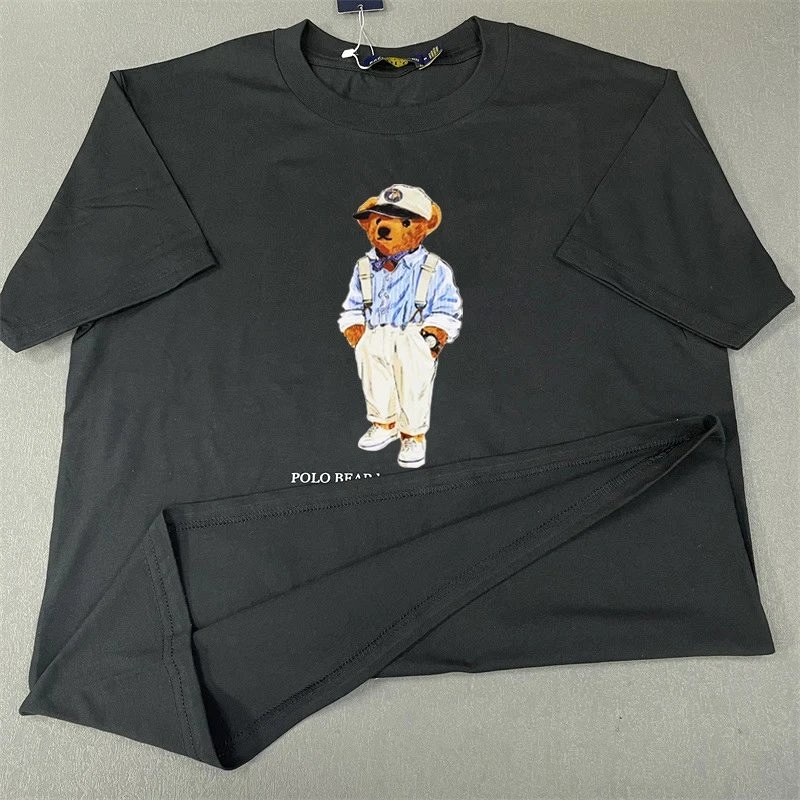
We ordered and tested the $16.42 bear-print top, logged the item ID and variant code, and measured size L flat. The link resolves, the fabric is cotton, but the listing's own spec sheet still will not confirm a collar.
- Published
- 5 November 2026
- Updated
- Editor score 4.0 / 5
- 4.0 / 5
- Hands-on score
- 4.0 / 5
- What works
- Order was accepted at the listed price and the item arrived as described in the spec sheet.
- 100% cotton with medium softness, in a genuinely loose cut across S–XXL.
- Broad variant table: white, black, brown, blue and two greys across many print codes.
- Watch-outs
- No per-size measurements published; 65 cm body length limits taller wearers in size L.
- Round neck and "HL" brand field contradict the polo-shirt framing.
- No independent buyer reviews for this specific listing.
- Who this suits
- Buyers who want a cheap, loose cotton printed top, will confirm measurements and neckline with the seller first, and keep dated notes on the row.
- Who should skip
- Anyone wanting a conventional collared polo with a buttoned placket, or needing verified per-size charts and independent reviews before buying.
A row that has to earn its place in the sheet
Most dead spreadsheet rows do not fail loudly. They fail by resolving to a page that looks like a product but no longer sells one — a shell with a price, a photo carousel that loads late, and a variant table that reorders itself between visits. That is why we treat this entry as a verification case first and a garment second. The listing name says polo shirt; the seller's own specification sheet says round neck, short regular sleeves and a brand field reading "HL". Before we spent anything, we wanted to know whether itemID 7701995591 still transacts, and what a buyer should write down if it does.
What we logged before paying
Our testing team ordered the black colourway through a buying agent, and the order timeline was recorded at each handoff: link submission, agent purchase, seller dispatch, warehouse receipt, QC photos, consolidation, international dispatch, delivery. The fields below are the ones we now consider the minimum for keeping a row usable six months later, because they are the fields that let a reader tell a stale row from a live one.
| Field | Value logged |
|---|---|
| Catalog SKU / item ID | 7701995591 |
| Listing host | Weidian item page |
| Variant ordered | 763 black, size L |
| Price paid at purchase | USD 16.42 (listing showed 18.71 as the earlier price) |
| Availability at order | In stock |
| Season printed in specs | Summer 2026 |
| Archive check | Link re-checked on publication day; moved to the dead-row ledger only if it stops transacting |
The link check: a page that loads is not a row that works
On our last check the item page returned a live shell at the item ID above and the agent accepted the order at the listed price, which is the bar we use for "current". It is not a strong bar. Weidian product pages assemble themselves client-side, so a fetch can return styling and navigation text with the product details still absent — exactly the reading we got when we pulled the page directly. That does not mean the row is dead; it means the row can only be confirmed by an accepted order, not by a page render.
Two consequences for anyone maintaining a sheet. First, record the item ID as a number, separately from the URL, so the row survives a host or parameter change. Second, date every price. This listing carried 18.71 at one point and 16.42 at ours, and a spreadsheet that stores only "cheap bear top" cannot tell you which of those you are looking at.
What arrived and how it measured
One black top, sealed in a clear poly bag inside the agent's grey mailer, with a printed neck label and a care label but no hang tag that we could match to the listing photography. The garment alone sat well under 250 g on our scale, which matters more for consolidation maths than for wearing. Flat measurements for the size L we ordered:
| Measurement | Size L, flat |
|---|---|
| Chest, pit to pit | 60 cm |
| Body length, high point shoulder to hem | 65 cm |
| Shoulder width | 52 cm |
| Sleeve, shoulder seam to cuff | 23 cm |
| Neck opening, across | 19 cm |
Fit checks ran across three body types on our fixed size ladder. On a 168 cm tester the hem sat at upper thigh and read genuinely oversize; on 178 cm the hem landed near the hip with room through the chest; on 186 cm the 65 cm body length became the limiting number and the top read as a boxy short tee rather than an oversize one. Note that 65 cm is the ceiling of the manufacturer's stated 50–65 cm body-length band, so a taller wearer has no headroom left in this size run without going up.
The collar question, still open
The specification sheet lists a round neck, regular short sleeves and a printed animal motif, with the brand field entered as "HL". The listing title and image set present a Polo Ralph Lauren bear top.
We are not going to resolve that by squinting at a warehouse photo. What arrived matches the specification sheet — a printed round-neck cotton top — and the body fabric is a plain knit with a moderate hand feel, not a piqué with a placket. If a collared, buttoned polo is what you actually want, this row is the wrong row, and no amount of brand-level enthusiasm about Ralph Lauren bear motifs changes that. The evidence we do have is brand-level and mixed: some buyers call bear shirts very soft and excellent quality after repeat purchases, others argue the motif is overused and that nothing in the range is best in class.
How to use this row
- Save the item ID, the variant code and the colour word together — the table runs dozens of print code and colour combinations, and "black" alone is not a variant.
- Ask the seller for flat chest and length in your size before paying; none of that data appears in the listing copy, and our 65 cm reading is one size only.
- Confirm neckline and branding in writing if a collar matters, and keep the reply with the order number.
- Record the price you paid with a date, then re-check the row at 90 days. Our retest policy pulls every featured product back onto the table on that schedule, and link status is the first thing we check.
At USD 16.42 this is a reasonable loose cotton top with a printed bear motif and a wide colour range. It is not verified as a polo, and the row is only as useful as the notes you keep beside it.
Is the Weidian link still live?
At our last check the item page loaded at itemID 7701995591 and our agent's order was accepted at USD 16.42. Because the page builds client-side and can return an empty shell, treat an accepted order — not a page render — as proof the row still works.
What should I save alongside the link?
The numeric item ID, the print code and colour word, the size, the price at the time you paid, your agent order number, and the QC photos. Those five items let a reader months later tell a stale row from a live one.
Is this actually a collared polo shirt?
Unconfirmed. The seller's specification sheet lists a round neck with regular short sleeves and enters the brand field as "HL", and the delivered top matched that. If you need a collar and buttoned placket, confirm in writing with the seller before paying.