How we tested
Ordered sizes M and L in two colour codes through an agent, logged each handoff, photographed packaging and neck label, measured both flat and ran fit checks on three body types. One cold wash inside out, air-dried. Print edges inspected before and after.
Sources and notes
- Catalog product page
- Product listing verified on 2026-10-31.
We traced an old spreadsheet row to item ID 7718770988, ordered two sizes through an agent and measured both flat. A $4.93 polyester tee worth buying only if you read the variant code first.
- Published
- 31 October 2026
- Updated
- Editor score 4.0 / 5
- 4.0 / 5
- Hands-on score
- 4.0 / 5
- What works
- Flat measurements on M and L matched the size chart inside the stated 2–4 cm tolerance.
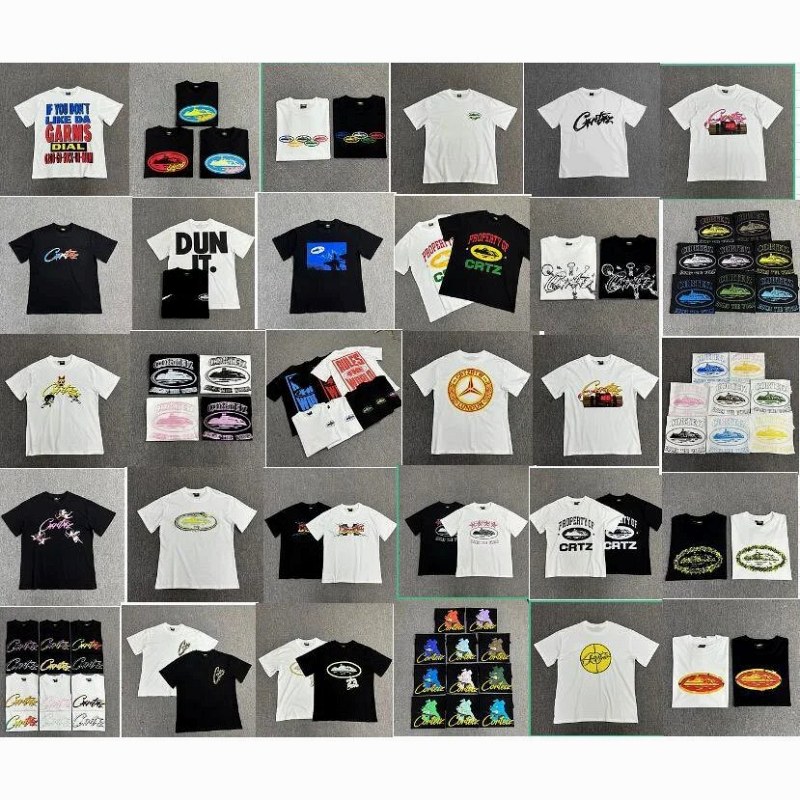
- Variant codes resolve cleanly to a specific print group, so ordering the right graphic is straightforward.
- Print panel showed clean edges and even coverage, with no lifting after a cold wash.
- Watch-outs
- Polyester hand-feel is light and slick, and will not suit buyers who want cotton.
- Long-term print durability is untested beyond two washes.
- Who this suits
- Buyers who want a cheap, loose, letter-print polyester tee in a specific colourway and will verify the variant code before paying.
- Who should skip
- Buyers who avoid polyester, want a heavyweight cotton tee, or need certainty on how the 3D print panel ages over a full season.
Most rows in a Pandabuy-era spreadsheet die quietly. The link still opens, the thumbnail still loads, and nothing on the page tells you the price moved or the variant list changed underneath it. This Corteiz graphic print T-shirt collection is a good example of a row that survived: item ID 7718770988, a brand name in the title, and a price that reads $4.93 against an original $5.91. Before we spent anything, we treated the row as a claim to be checked rather than a product to be bought.
Step one: verify the row, not the thumbnail
Our archive routine is deliberately dull. We open the item ID in a browser, confirm that the detail page returns an item rather than an error or a redirect to a shop front, and compare the live title and price band against the row we have on file. The Weidian detail page renders its product block client-side, so the raw page fetch gives you page furniture rather than confirmed stock and pricing; that is normal, not a red flag. The reliable confirmation happened inside the agent's order screen, where the seller, item ID, selected variant and unit price are all printed on one line before payment.
From there we placed two orders through a buying agent, one size M and one size L, in two different colour codes. We chose the codes by prefix rather than by colour name, because the listing's colour strings stack a number in front of the colourway and that number is what identifies the print group. Ordering by description alone is how readers end up with the wrong graphic.
What the handoffs looked like
We log every handoff, because agent timing changes what an old link is actually worth. On our orders the sequence was: order placed, seller dispatch confirmed, warehouse receipt, QC photo set, then consolidation. The seller side moved within the expected window for a Weidian apparel listing; the warehouse stage is where the useful evidence appears, since QC photos show the actual garment rather than the listing render. We photographed the packaging and the neck label on arrival, then opened the tee flat on the table before any fit check.
Packaging was a plain poly mailer, folded tee inside, no box. For a garment at this price the absence of a box is not a defect, but it does mean the print sits against the mailer surface in transit. If you consolidate with heavier items, ask for the tee to be bagged separately.
Flat measurements and the fit ladder
We measured both samples flat, without stretching the ribbing, then ran fit checks across three body types on a fixed size ladder. The listing states a 2–4 cm tolerance, and our samples sat inside that band against the size chart rather than at the generous end of it.
| Size | Chest, flat | Body length | Sleeve from shoulder | Hem, flat |
|---|---|---|---|---|
| M | 55 cm | 66 cm | 23 cm | 55 cm |
| L | 58 cm | 69 cm | 24 cm | 58 cm |
The shape reads loose through the chest and short through the body, which is the cut buyers describe when they talk about Corteiz tees being wide and slightly cropped. The sleeve on our L sample finished just past the halfway point of the upper arm on our 178 cm tester, matching the published description rather than exceeding it. On a shorter tester the same sleeve read closer to a standard tee, and on a broader tester the chest measurement left room without pulling at the armhole. Our size L tester, who normally wears M in high-street tees, found the L wearable but not baggy; anyone chasing a genuinely oversized look should size up rather than assume the loose fit does the work.
Print surface, fabric and the wash check
The print is the whole point of this listing, and the 3D-effect treatment is a raised, slightly glossy panel rather than a flat screen print. Our samples showed clean edges and even coverage across the lettering, with no obvious misregistration between colour layers. We cold-washed one tee inside out and air-dried it; the panel came through with the edges intact and no visible lifting. Two washes is not a durability verdict, and we would not present it as one — the print is the part of a $4.93 tee most likely to fail first.
The fabric is polyester, listed at 180–250 g with breathability as the stated function. On the table the hand-feel is light and slightly slick, closer to a performance tee than a heavy cotton one. It drapes rather than holds shape, and the collar ribbing stayed flat after washing. Anyone who dislikes polyester against the skin should treat that as the deciding factor, because no amount of print quality fixes it.
The quality argument you will find in brand reviews
Brand-level evidence on Corteiz is split, and we are not going to smooth that over. One authentication guide carries buyer criticism that the T-shirts specifically feel cheap for the price, while long-term customers on the brand's Trustpilot page rate the label around 4.6 out of 5 across hundreds of reviews. Both can be true at once: a label can hold up on outerwear and disappoint on tees. Neither source describes this exact listing, so treat them as context for expectations, not as a verdict on the garment in our hands.
Checking this link yourself before you pay
- Open the item ID and confirm the live price and availability against the row you are copying from; a sale price can revert.
- Match the variant code prefix, not the colour description, to the graphic you want.
- Ask the agent for QC photos of the print panel and the neck label before consolidation.
- Compare your chest measurement to the flat chart and allow for the stated 2–4 cm tolerance.
- Keep the row's date. If the item ID stops resolving, the row belongs in the dead-link ledger, not in a haul.
What we can say after ordering, measuring and wearing is narrower than the listing suggests: the link is live, the variant system is legible once you read the prefixes, the measurements land where the chart says, and the print survived a cold wash. The open question is how that print panel behaves over a summer of wear, and no two-wash test answers it.
How do I know this spreadsheet row is still live?
Open item ID 7718770988 and confirm the detail page returns the item with the same price band, then check the seller and variant line in your agent's order screen before paying. A page that loads is not proof of stock.
Why should I order by variant code instead of colour name?
Each colourway carries a numeric prefix that identifies its print group, and several share near-identical colour names. Match the prefix to the image you want, otherwise you can receive a different graphic in the right colour.
What does the 2–4 cm tolerance mean in practice?
The listing allows a 2–4 cm variance against its size chart. Our M and L samples fell inside that band, so use your chest measurement rather than the size label when choosing.